
Everything You Need to Know About Hair Extensions in London & Essex


Choosing hair extensions should feel considered, not confusing. The right method can add length, volume, shape and polish while still moving like your own hair. The wrong method, or the wrong fitting for your hair type, can feel heavy, visible or difficult to maintain.
This 2026 guide explains the most popular professional hair extension methods available in London and Essex, including Tape-In, Nano Ring, Micro Ring, Keratin Bond, I-Tip and LA Weave. You will learn how each method works, who its best suited for, how long it lasts, and what maintenance is required to keep your extensions looking seamless.
Whether the goal is soft everyday volume, longer hair for an event, discreet thickness around the sides, or a full transformation, the most natural result starts with a personalised consultation. Hair extensions are not one-size-fits-all. Your natural hair density, lifestyle, colour, styling habits and long-term goals all matter.
What hair extensions are and how they work
Hair extensions are additional hair pieces fitted to your natural hair to create more length, volume, density or shape. Professional extensions are usually applied in small, precise sections so they blend with your own hair and move naturally.
High-quality extensions are commonly made from human hair extensions, which can be washed, styled and finished much like natural hair. The quality of the hair, the colour match and the fitting technique all affect the final result.
Professional hair extensions can help with:
Adding length while natural hair grows
Creating fuller ends if hair feels fine or wispy
Adding volume through the sides
Balancing a haircut that feels too thin
Enhancing colour without using bleach on natural hair
Creating a more styled, polished finish day to day
A subtle set may only add thickness. A fuller set may create both length and volume. The best choice depends on the natural hair underneath. A skilled extensionist will look at your root strength, hairline, density and scalp comfort before recommending a method.
The most convincing extensions are not the heaviest or longest. They are the ones chosen carefully for your natural hair and fitted with precision.
Why the consultation matters before choosing a method
A consultation is the point where preferences meet practicality. Many clients arrive with a method in mind after reading about Tape-In hair extensions or Nano Ring hair extensions online. That is a useful starting point, but it is not the whole decision.
During a professional consultation, the specialist should assess:
Natural hair density
Hair length and current shape
Scalp sensitivity
Hairline and parting habits
Previous colour or chemical treatments
Daily styling routine
Gym, swimming or holiday plans
Desired length, finish and level of volume
Maintenance schedule and budget
For clients comparing hair extensions London services, the consultation stage is often where the difference in finish begins. A good fit is not only about the attachment method. It is also about placement, weight distribution, colour blending and realistic expectations.
The same applies to clients exploring options for hair extensions Essex. A beautiful result should suit real life, not just look good on the day of fitting.
Common client question
Can I choose the method I want?
Yes, preference matters. A consultation will confirm whether that method suits your natural hair. If it does not, a specialist can explain why and suggest a safer or more discreet alternative.
Comparing the main hair extension methods
Each extension method has its own feel, maintenance rhythm and ideal client. None is best for everyone. The right method depends on the hair it is being fitted to.
The table below gives a simple overview before looking at each method in more detail.
Method | Best suited to | Typical maintenance | Main consideration |
Tape-In | Fine to medium hair, fast transformations, flat discreet fitting | Around 6 to 8 weeks | Needs careful product use near tapes |
Nano Ring | Fine to medium hair, discreet strand-by-strand fitting | Around 8 to 10 weeks | Not ideal for very fragile hairlines |
Micro Ring | Medium to thicker hair, reusable strand method | Around 8 to 10 weeks | Rings are slightly larger than nano rings |
Keratin Bond | Many hair types, long wear, flexible placement | Around 3 to 4 months | Removal must be done professionally |
LA Weave | Medium to thick hair, volume and length | Around 6 to 8 weeks | Needs enough density to hide the weft |
Timelines vary. Natural hair growth, aftercare, styling habits and the amount of hair fitted all affect maintenance.
Tape-In hair extensions are soft, flat and efficient

Tape-In hair extensions use slim wefts with medical-style adhesive tabs. Small sections of natural hair are placed between two tape pieces, creating a flat “sandwich” that sits close to the head.
This method is popular because it offers a soft, smooth finish without individual bonds. The fitting is usually quicker than strand-by-strand methods, which makes it appealing for clients who want visible volume or length without a lengthy appointment.
Who Tape-In extensions suit
Tape-In extensions can work well for:
Fine to medium hair
Clients wanting a flatter attachment
Soft volume through the mid-lengths and ends
Adding length without excessive bulk at the root
Clients who prefer a quicker fitting and refit process
They can be especially helpful when hair lacks fullness at the ends. Because the tapes lie flat, they can feel comfortable when placed correctly.
When Tape-In may not be the best choice
Tape extensions may not suit everyone. They are less ideal if the hair is very oily at the roots, if the client uses heavy oils or masks close to the scalp, or if the natural hair is too fragile to hold the tape panels safely.
They also need thoughtful placement around the hairline and crown. If fitted too close to visible areas, tapes may show when the hair is tied up.
Maintenance and longevity
Tape-In hair extensions are usually maintained every 6 to 8 weeks. During maintenance, the tapes are removed, cleaned, re-taped and refitted if the hair remains in good condition.
With good aftercare, premium human hair can often be reused for several appointments, although this depends on wear, styling and home care.
Common client question
Will tape extensions damage my hair?
When fitted, maintained and removed correctly, tape extensions should not cause damage. Problems usually happen when tapes are left too long, removed at home, brushed roughly, or exposed to unsuitable products near the adhesive.
Nano Ring hair extensions are discreet and lightweight

Nano Ring hair extensions are a strand-by-strand method. Small extension strands are attached to small sections of natural hair using tiny rings. No heat or glue is used during fitting.
The rings are smaller than traditional micro rings, making them a discreet choice for many clients. This method allows careful placement, which can be helpful when adding volume in specific areas.
Who Nano Rings suit
Nano Rings can be a good option for:
Fine to medium hair with enough root strength
Clients wanting individual movement
Discreet placement through the sides and back
Natural-looking hair extensions with flexible styling
Clients who prefer a no-glue, no-heat fitting method
Because the strands move individually, Nano Rings can feel very natural when fitted in the right density.
When Nano Rings may not be suitable
Nano Rings are small, but they still need enough natural hair to support each strand. They may not be suitable for very fragile, shedding or over-processed hair. Caution is also needed around delicate hairlines.
If a client wears very high ponytails every day, placement must be planned carefully to keep the rings comfortable and discreet.
Maintenance and longevity
Nano Ring maintenance is often needed around every 8 to 10 weeks. The rings are opened, the extensions are moved back up towards the root, and any shedding or loose strands are corrected.
Leaving Nano Rings too long can cause tangling at the root, so timely maintenance is important.
Common client question
Are Nano Rings better than tapes?
Not necessarily. Nano Rings offer more individual movement and detailed placement. Tapes can feel flatter and are often quicker to fit. The better choice depends on hair density, styling habits and the finish desired.
Micro Ring hair extensions offer secure individual placement

Micro Ring hair extensions are similar in principle to Nano Rings, but the rings are slightly larger. Each extension strand is secured to a section of natural hair using a small ring, without heat or glue.
They are a well-established method and can work beautifully when the natural hair has enough density to disguise the rings.
Who Micro Rings suit
Micro Rings may suit:
Medium to thicker hair types
Clients wanting strand-by-strand movement
Those who prefer a reusable extension method
Clients with enough density at the root
Styles where individual placement helps blending
They can create fullness while still allowing the hair to move in separate strands.
When Micro Rings may not be ideal
Because the rings are larger than Nano Rings, they are not always the most discreet choice for very fine hair. They also require careful sectioning. Too much weight on too little natural hair can cause tension, so precision is essential.
Micro Rings are also less suitable for clients who dislike feeling attachments at the root.
Maintenance and longevity
Maintenance is usually due every 8 to 10 weeks. During this appointment, the rings are moved up and replaced where needed.
Good home brushing is essential. The root area must be kept neat to prevent matting as the natural hair sheds.
Common client question
Can Micro Ring extensions be reused?
Often, yes. If the extension hair remains in good condition, it can usually be reused for maintenance appointments. The rings themselves are replaced, but the hair may last longer with careful aftercare.
Keratin Bond hair extensions give long wear and precise blending
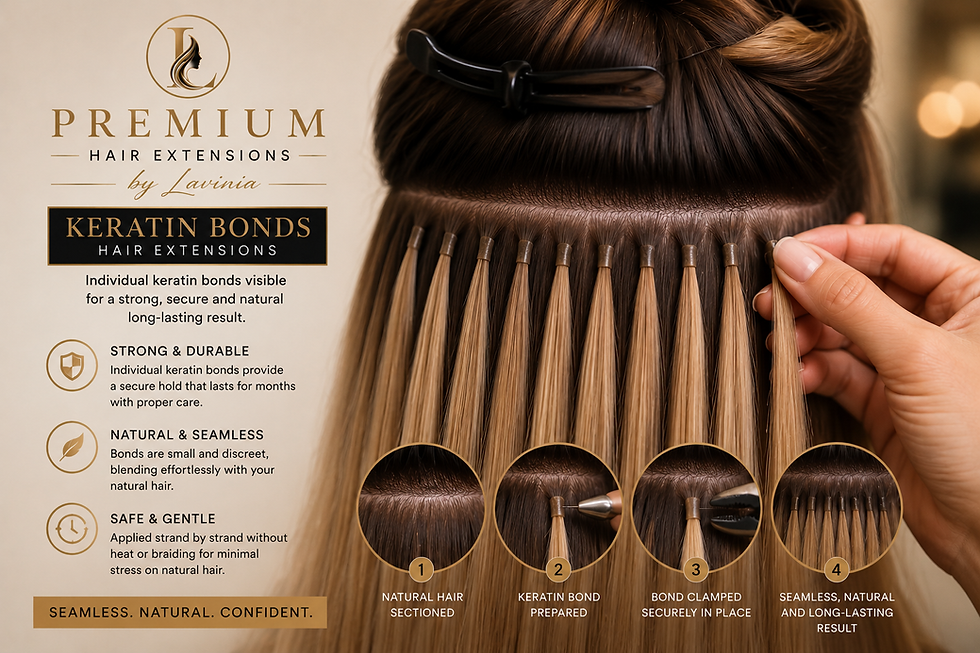
Keratin Bond hair extensions are fitted strand by strand using small keratin tips. The keratin is softened with a professional heat tool and shaped around the natural hair section.
This method is known for its neat finish and flexible placement. It can be particularly effective where detailed blending is needed, such as around shorter layers or areas that need carefully distributed volume.
Who Keratin Bonds suit
Keratin Bonds can work well for:
Fine, medium or thicker hair, depending on strand size
Clients wanting longer wear between full maintenance
Detailed blending around layers
Adding both length and density
Clients who are comfortable with professional heat application
The bonds can be customised in size, which helps the specialist tailor the fitting to the natural hair.
When Keratin Bonds may not be suitable
Keratin Bonds need careful professional removal. They are not the best choice for clients who know they cannot return for proper maintenance or removal.
They may also be unsuitable if the hair is very weak, heavily damaged or prone to breakage. As with all methods, the natural hair must be strong enough to hold the added weight.
Maintenance and longevity
Keratin Bonds are often worn for around 3 to 4 months before removal, although some clients may need earlier checks. They are not usually moved up in the same way as rings or tapes. Instead, the bonds are professionally removed and a new fitting may be planned if the hair remains suitable.
Regular maintenance checks help ensure the bonds stay separated and comfortable.
Common client question
Can I use heat tools with Keratin Bonds?
Yes, but heat should not be applied directly to the bonds. Straighteners, tongs and wands should be used on the lengths and ends, with a suitable heat protectant and careful temperature control.
LA Weave hair extensions create fullness with wefted hair

LA Weave Hair Extensions use rows of small rings to create a secure base, then a weft of hair is sewn onto that base. This method can add noticeable volume and length with fewer rows than strand-by-strand methods.
The result can look full and polished, especially on medium to thicker natural hair.
Who LA Weave suits
LA Weave can be suitable for:
Medium to thick hair
Clients wanting fuller lengths
Hair that can comfortably hide weft rows
Those who like a more voluminous finish
Clients who do not need very fine placement around the hairline
It can be a good choice when the natural hair has enough density to conceal the weft and support the row.
When LA Weave may not be ideal
LA Weave is not usually the best option for very fine or sparse hair. The weft needs coverage. If the natural hair is too light in density, the rows may show or feel too heavy.
It also needs careful drying after washing. Leaving the weft area damp can affect comfort and hygiene.
Maintenance and longevity

LA Weave maintenance is commonly needed every 6 to 8 weeks. As the natural hair grows, the weft moves down and should be repositioned.
The hair itself may be reused if kept in good condition. As with all methods, the lifespan depends on hair quality, aftercare and styling habits.
Common client question
Is a weave uncomfortable?
It should not be painful. Some clients feel awareness of the rows for the first few days, but it should settle. Tightness, pulling or headaches are signs that the fitting needs assessment.
How to choose the right hair extension method
The best method is the one that works with the natural hair, not against it. A polished finish comes from matching the attachment type, hair quality, colour and placement to the client’s needs.
A consultation should answer five key questions.
What is the natural hair like?
Fine hair often needs lighter, flatter or smaller attachments. Medium hair may suit several methods. Thick hair may need more hair, stronger distribution or a method that can support a fuller result.
Hair condition matters as much as hair type. Weak, brittle or over-processed hair may need a gentler plan, less weight, or time to recover before extensions are fitted.
What result is wanted?
A client wanting a subtle thickening service may not need the same method as someone wanting long, full hair. Adding volume is different from adding major length.
For a discreet look, the aim is often to fill the shape rather than simply add inches.
How often can maintenance be booked?
Some methods need appointments every 6 to 8 weeks. Others can be worn longer before removal, but still require care and checks.
A method only works if it fits the client’s schedule. Skipping maintenance is one of the most common causes of tangling, slipping and discomfort.
How is the hair worn day to day?
Hair worn down most days gives more placement options. Hair worn in high ponytails, buns or gym styles needs careful sectioning so attachments remain hidden and comfortable.
Frequent heat styling, swimming, sauna use and heavy workouts can also influence the method choice.
What level of aftercare feels realistic?
All extensions need care. Some methods require more product awareness. Others need more root separation or careful drying.
A good recommendation is honest. It should suit the person’s routine, not only the desired photo.
What premium hair extensions should feel and look like
Premium hair extensions should blend in colour, texture, density and movement. The finish should feel balanced from roots to ends. Extensions should not feel painfully tight, overly heavy or obvious when the hair moves.
Hair quality plays a major role. Remy Hair Extensions usually refer to human hair with the cuticles aligned in the same direction, which helps reduce tangling when cared for correctly. Russian Hair Extensions are often associated with a finer texture, although quality can vary across suppliers, so the sourcing and grading should be discussed clearly during consultation.
Premium Hair Extensions by Lavinia focuses on tailored fittings using high-quality human hair, careful colour matching and method selection based on the client’s natural hair. That tailored approach is what helps create natural-looking hair extensions rather than a uniform, heavy finish.
Common client question
Will people be able to tell I have extensions?
Well-fitted extensions should blend with your natural hair. The main factors are colour match, correct amount of hair, precise placement and a cut or blend after fitting. If the natural hair is very short or blunt, a softer blend may need careful planning.
Maintenance appointments and what to expect
Maintenance is not an optional extra. It protects the natural hair and keeps the extensions looking soft, neat and comfortable.
During a maintenance appointment, the specialist may:
Check the scalp and natural hair
Remove shed hair from the attachment area
Reposition extensions that have grown down
Replace tapes, rings or thread where needed
Remove any extensions that are no longer suitable
Refresh the shape and blend
Give updated aftercare advice
Natural hair sheds every day. When extensions are fitted, some shed hair stays held within the attachment until maintenance. This is normal. Regular appointments prevent that shed hair from tangling at the root.
Maintenance timing varies by method, but most clients should expect appointments roughly every 6 to 10 weeks for tapes, rings and weaves. Keratin Bonds may be worn longer before removal, but they still benefit from check-ins.
Longevity and what affects how long extensions last
There are two types of longevity to understand.
How long the method can be worn before maintenance or removal
This depends on the attachment method and natural hair growth. A fast grower may need earlier maintenance than someone whose hair grows more slowly.
How long the extension hair itself lasts
This depends on hair quality and aftercare. High-quality human hair can often be reused or worn for months, but it still needs gentle care. Heat, poor brushing, harsh products, chlorine, sun exposure and sleeping with wet hair can shorten its lifespan.
To help extensions last well:
Brush gently and regularly with an extension-friendly brush
Support the root while brushing
Always dry the root and attachment areas properly
Use recommended shampoo and conditioner
Keep oils and masks away from tapes, rings and bonds
Sleep with hair dry and loosely tied
Book maintenance on time
Avoid picking, twisting or pulling attachments
Common client question
Can I go on holiday with extensions?
Yes, but holiday care matters. Sun cream, salt water and chlorine can affect extension hair and colour. Tie hair back before swimming, rinse afterwards, use recommended products and avoid leaving extensions wet for long periods.
Aftercare for professional hair extensions
Good aftercare should feel manageable. It is a set of small habits that protect both the extensions and the natural hair.
Washing
Wash gently, focusing shampoo at the scalp and letting the product move through the lengths. Avoid rough circular scrubbing at the roots.
Conditioner should be applied through the mid-lengths and ends, not directly on tapes, bonds or rings unless advised.
Drying
Extensions should not be left wet at the root. Gently squeeze out excess water with a towel, then dry the attachment area thoroughly before finishing the lengths.
Sleeping with wet extensions can encourage tangling and matting.
Brushing
Brush from the ends first, then work upwards. Hold the hair near the root to reduce tension. Brush in the morning, before washing, after drying and before bed.
The root area should also be checked gently with fingers to keep attachments separate.
Styling
Use heat protectant and avoid placing hot tools directly on bonds, tapes or rings. Keep temperatures moderate where possible and avoid repeated heat on the same sections.
Sleeping
Sleep with hair fully dry. A loose plait or low ponytail can reduce friction. Silk or satin pillowcases may also help reduce rubbing.
A simple method guide by hair type and goal
This guide gives a starting point. A consultation is still needed before fitting.
Hair type or goal | Methods often considered | Why they may help |
Fine hair needing discreet volume | Tape-In, Nano Ring, small Keratin Bonds | Lighter, flatter or smaller attachments can blend well |
Medium hair wanting length and volume | Tape-In, Nano Ring, Micro Ring, Keratin Bond | Several methods may be suitable depending on lifestyle |
Thick hair wanting fuller length | LA Weave, Keratin Bond, Micro Ring | These can support more density when fitted correctly |
Very active lifestyle | Nano Ring, Keratin Bond, carefully placed Tape-In | Method depends on washing frequency and styling habits |
Low-maintenance preference | Keratin Bond or a carefully planned method | Fewer move-up appointments, but professional removal is essential |
Event or bridal hair planning | Tape-In, Keratin Bond, Nano Ring | Timing and styling plans guide the best choice |
I-Tip Hair Extensions are another term clients may hear when researching strand-by-strand methods. They are often fitted with rings or beads, so they overlap with Micro Ring and Nano Ring techniques depending on the attachment size used.
What to ask during a consultation
A good consultation should feel calm and clear. It should give enough information to make a confident decision without pressure.
Helpful questions include:
Which method is safest for my natural hair?
How much hair do I need for my goal?
Will this blend with my current haircut?
How often will I need maintenance?
Can I wear my hair up?
What products should I avoid?
How long should the appointment take?
Can the hair be reused?
What happens if I want the extensions removed?
Should I colour my natural hair before fitting?
A professional should also explain any limitations. For example, very short blunt hair may need more careful blending. Fine hair may not support very long or heavy extensions. A sensitive scalp may need a lighter fitting plan.
Honest guidance protects the final result.
FAQ
How long should my natural hair be for extensions?
It depends on the method and the desired result. Many clients need enough length to cover the attachments and blend the extensions through the ends. Very short or blunt hair may still be possible, but it usually needs a careful plan and realistic expectations.
Are hair extensions suitable for fine hair?
Fine hair can wear extensions when the method, weight and placement are chosen carefully. Tape-In, Nano Ring or small Keratin Bond fittings may be considered, but the natural hair must have enough strength to support them safely.
How often will I need maintenance?
Most Tape-In and LA Weave clients return around every 6 to 8 weeks. Nano Ring and Micro Ring maintenance is often around every 8 to 10 weeks. Keratin Bonds may be worn for around 3 to 4 months before professional removal. Your exact timing depends on hair growth and aftercare.
Can I colour my extensions?
Extensions should not be coloured without professional advice. Human hair extensions can react differently from natural hair, especially if they have already been processed. Colour matching should ideally be done before fitting.
What is the most natural-looking method?
There is no single answer. Natural results come from choosing the right method for the hair type, using high-quality hair, matching colour accurately and fitting the extensions with balanced placement. For one client that may be tapes. For another, it may be Nano Rings or Keratin Bonds.
Book a personalised consultation with Premium Hair Extensions by Lavinia

The right hair extensions should feel beautiful, comfortable and suited to everyday life. The method matters, but the consultation matters just as much. It allows the fitting to be tailored to natural hair type, desired result, lifestyle and long-term hair health.
For expert guidance on premium hair extensions in London and Essex, book a personalised consultation with Premium Hair Extensions by Lavinia. Discuss your goals, compare suitable methods and receive a recommendation designed around your hair.
A considered fitting starts with a clear conversation. From there, the right method, colour and placement can create hair that feels polished, balanced and naturally yours.


